Living in Casa de Campo
Morning golf, afternoons at the marina, evenings in Altos de Chavón — with one gate between all of it and the world outside. An insider’s view of life inside the gates.
A Resort You Live In, Not Just Visit
Casa de Campo is our home market, and the first distinction we draw for buyers is between a holiday and an address. Since its founding in 1974, the resort has had five decades to mature into a working community rather than a cluster of second homes. You see it in the everyday infrastructure as clearly as in the amenities.
A medical clinic operates on property. Resident families have schooling within the gates. A resort police force and 24-hour gated access cover all 7,000 acres. None of it sells a brochure, yet it is exactly what makes a home work for a full year rather than a fortnight.
Below: how days here tend to run, and how owners choose between seasonal and full-time use.
What a Day Can Hold
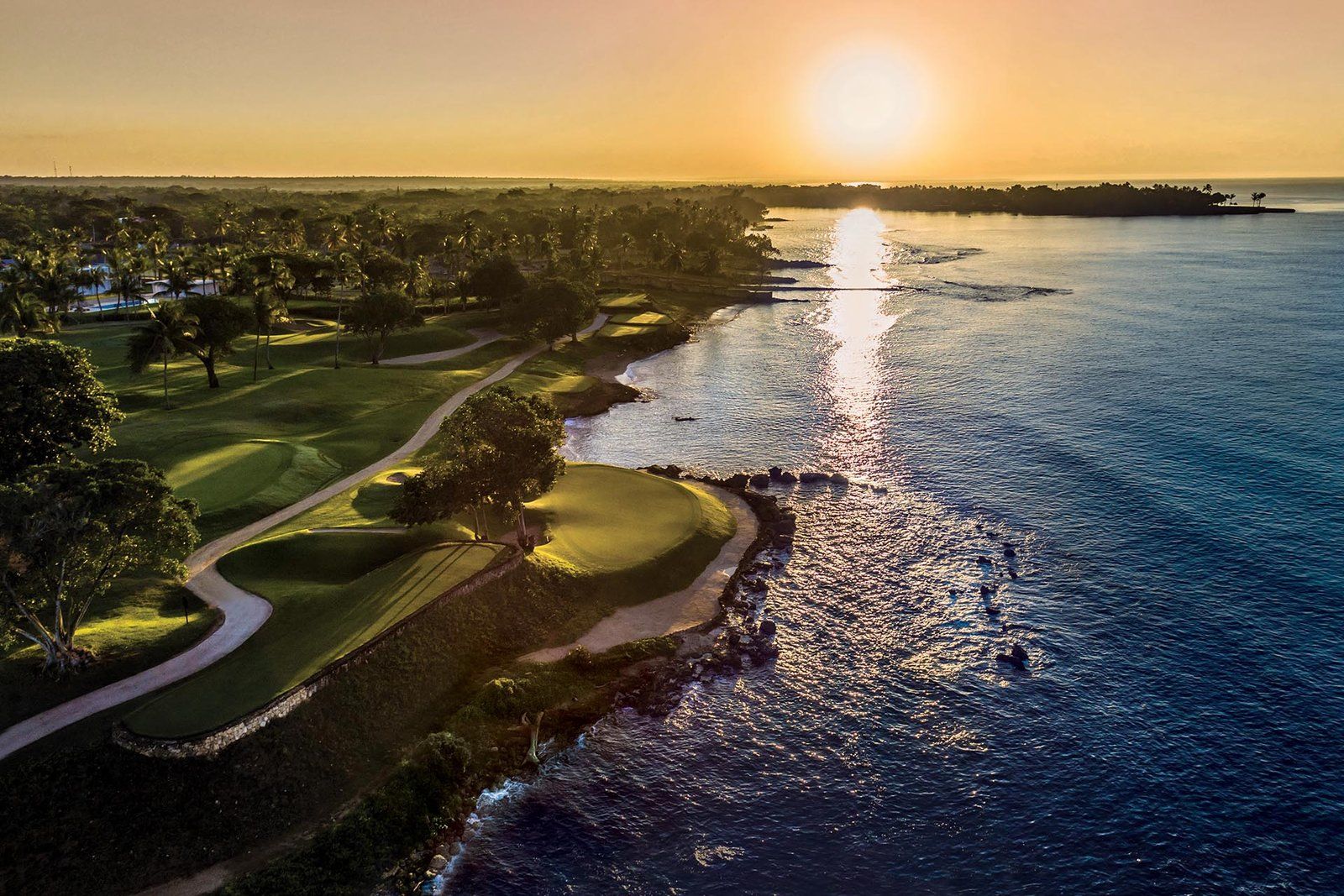
Three Pete Dye courses — Teeth of the Dog, Dye Fore and The Links — put 63 holes inside the gates, and Teeth of the Dog plays seven of them directly on the Caribbean. The national picture: golf in the Dominican Republic.
A Portofino-style harbour of 370 slips, taking yachts from 30 to 250 feet. Portofino Plaza gathers more than 20 boutiques and restaurants, and the Yacht Club sets the social tone at this end of the resort.
Minitas Beach Club is built around an adults-only infinity pool and a lounge deck facing the Caribbean, with family pools, water sports, children’s activities and service on the sand.
Over 15 restaurants and bars inside the resort, from grills on the beach to fine dining in Altos de Chavón.
An equestrian centre for polo, show jumping and trail riding, plus clay tennis courts and a shooting centre.
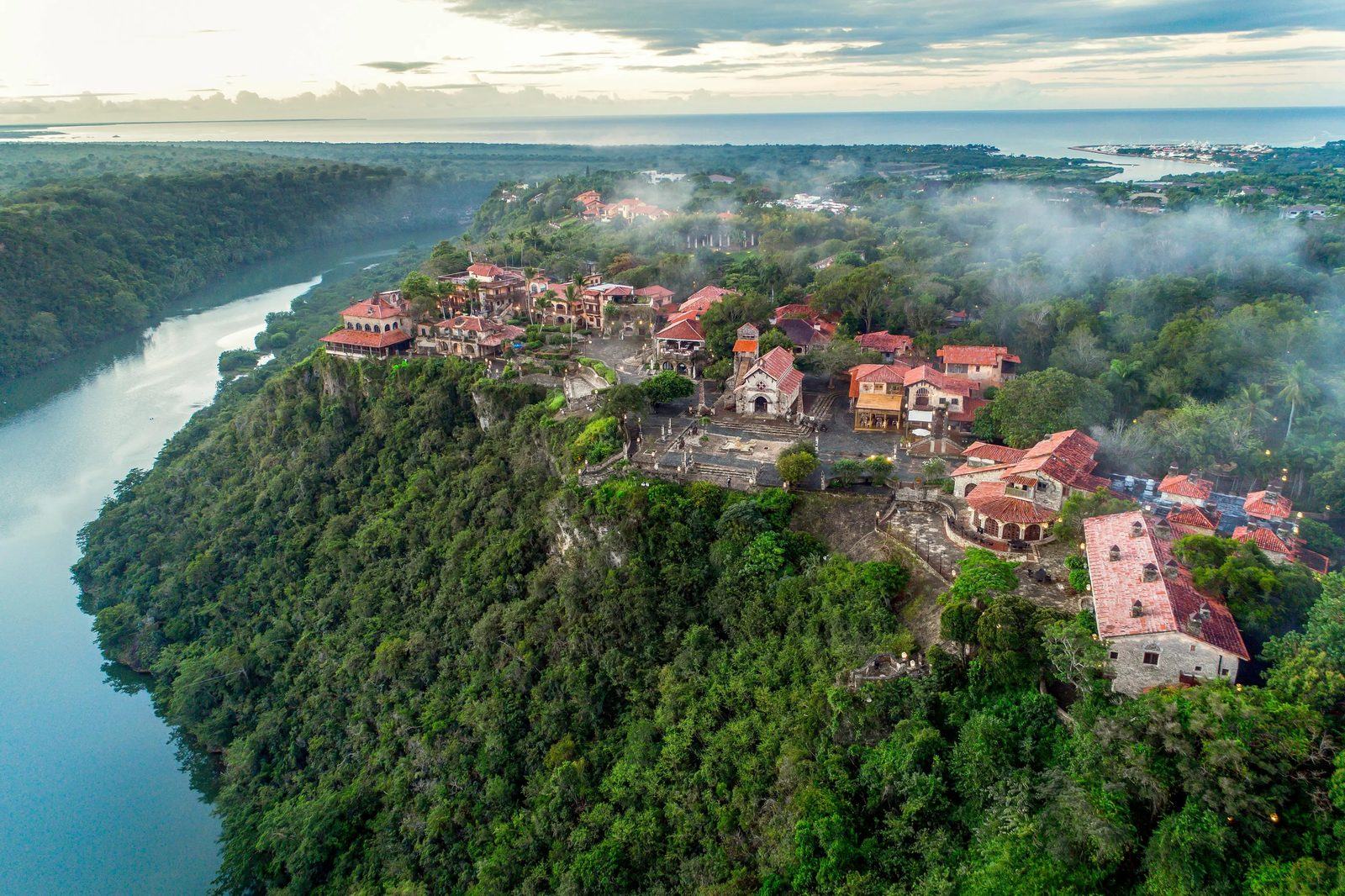
High above the Chavón River, Altos de Chavón is a hand-built replica of a 16th-century Mediterranean village, home to galleries, artisan workshops and a 5,000-seat amphitheatre.
Privacy, Security and Permanence
Access is gated 24 hours a day, and a dedicated resort security force covers all 7,000 acres. Within that, privacy depends on the area: the hillside estates above the Chavón River hold the largest and most private lots.
Hundreds of private villa owners live here, many full time or for long seasons. Their presence is what keeps the clinic, the school and the year-round services running.
La Romana International Airport (LRM) is inside the resort. It handles charter and private aviation, with seasonal commercial service from several carriers, and clears customs and immigration on site.
The private beach, pools, tennis, horseback riding, a shooting centre and children’s activities, plus schooling on the resort for families who live here. The resort is as established with families as with golfers.
Around the marina, life is walkable and social. The hillside is quieter and more private, and the fairway villas sit in between. Our neighborhoods guide compares them side by side.
Seasonal, Full-Time or Let
In our experience, owners settle into one of three patterns, and the pattern usually decides both the property and the area. Full-time residents rely on the infrastructure: the clinic, the school, dining that stays open all year. Seasonal owners need a villa that can be closed up cleanly and reopened without fuss.
The third group lets the villa through the resort’s managed rental programme while away, and the resort takes care of bookings, maintenance and guest services. Villa owners pay monthly HOA fees for resort security, infrastructure maintenance, landscaping and general upkeep. The amount varies with the property’s size and location, and Oscar can provide the current schedule for any villa you are considering.
Prefer to live the resort before you buy? Oscar also represents fully staffed luxury villa rentals inside the gates.

More on Casa de Campo
Homes on the market now, the property categories, the master plan and the resort’s investment case.
AreasCasa de Campo NeighborhoodsThe golf-front, marina, hillside and interior areas, and how buyers weigh one against another.
ProcessBuying Property in Casa de CampoEvery stage of a purchase, from the first brief through due diligence to closing, and the points at which independent advice is essential.
Frequently Asked Questions
Yes, and many owners do. Beyond the hotel, hundreds of private villa owners make Casa de Campo home, full time or for extended seasons. The community has its own police force, medical clinic and school, and access is gated 24 hours a day across the resort.
A great deal. There are 63 holes of golf on three Pete Dye courses, the 370-slip marina, Minitas Beach Club, polo and show jumping at the equestrian centre, clay tennis courts, a shooting centre, 13 pools and more than 15 restaurants and bars. Altos de Chavón adds galleries, dining and its 5,000-seat amphitheatre.
Very much so. Children have the private beach, pools, tennis, horseback riding and their own activities, and families who live here full time have schooling options without leaving the gated community.
Many place the villa in the resort’s managed rental programme, which takes care of bookings, maintenance and guest services. Villa owners also pay monthly HOA fees for resort security, infrastructure maintenance, landscaping and general upkeep, varying with property size and location.
See It for Yourself
Casa de Campo reads differently in person. Oscar Lauzardo, Managing Director, The Agency La Romana, plans each tour around how you intend to live here, not around a listing sheet.